What Happens After a CT Simulation?
Radiation therapy is a vital component of cancer treatment, used to destroy cancer cells while sparing surrounding healthy tissues as much as possible. One of the most important steps before starting actual radiation sessions is CT simulation, a process that helps doctors map out the most precise and effective treatment plan.
But many patients wonder: What happens after a CT simulation? How long before treatment starts, and what should one expect next?
This article will guide you step-by-step through what follows after your CT simulation, helping you understand how your Radiation Oncology team — including doctors, physicists, and therapists — prepare a customized treatment plan for you at Action Cancer Hospital, one of the leading cancer care centers in Delhi.
Understanding CT Simulation in Radiation Oncology
Before diving into what happens afterward, let’s quickly recap what CT simulation involves.
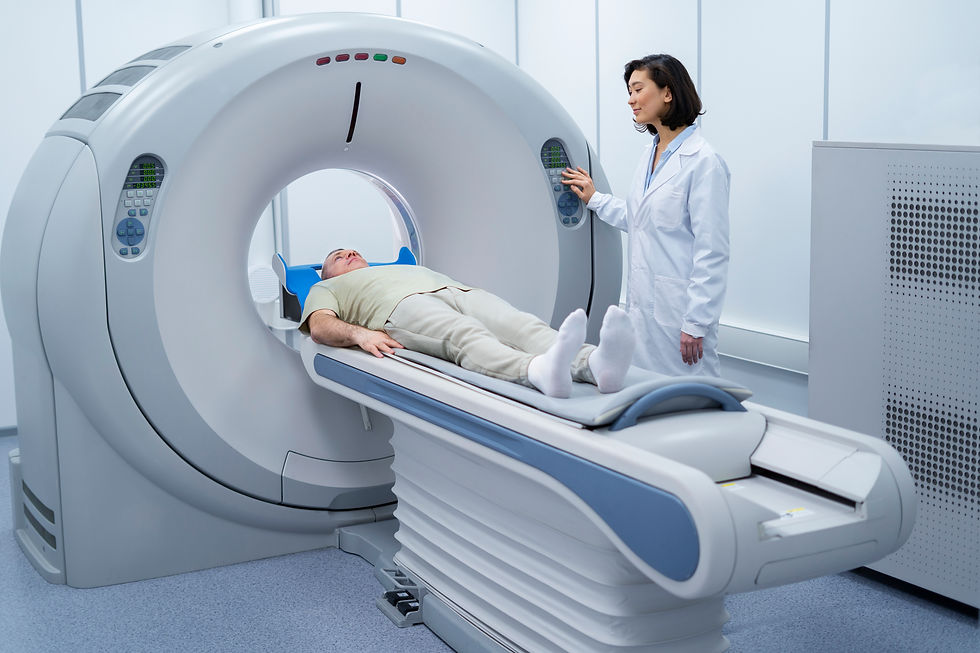
CT simulation, also called “radiation planning CT,” is a specialized type of CT scan used to determine the exact location, shape, and size of your tumor. During this process:
You are positioned on a CT table in the same way you will be during actual radiation treatments.
Immobilization devices, such as molds, masks, or cushions, may be used to ensure you stay in the same position every day.
The CT scanner takes detailed 3D images of your body, focusing on the area where radiation will be targeted.
Tiny tattoos or marks may be made on your skin to help align the radiation beams precisely each time you receive treatment.
The goal of CT simulation is accuracy and consistency — every treatment session afterward must deliver radiation to the same location with millimeter precision.
1. Image Review and Data Processing
After your CT simulation scan is complete, the images are transferred to a specialized computer system. This is where the Radiation Oncology team begins their planning work.
At Action Cancer Hospital, these images are imported into advanced treatment planning software. Your radiation oncologist reviews each slice of the CT images to identify and outline:
The tumor (also called the target volume)
Nearby organs and healthy tissues that need protection
Potential pathways for radiation beams
This process is called contouring, and it forms the foundation for your treatment plan.
It may take several hours or even days for the team to complete this step, as it requires extreme precision. The more complex the case — such as brain, head and neck, or prostate cancers — the more time the contouring and data review take.
2. Treatment Planning and Dose Calculation
Once contouring is complete, the next phase involves creating a personalized treatment plan.
This is done by a medical physicist and a dosimetrist, who work closely with your radiation oncologist. Together, they use sophisticated software to simulate how radiation beams will enter your body and deliver doses to the tumor while avoiding vital organs.
Here’s what they do:
Determine the optimal beam angles and intensity.
Calculate the radiation dose needed to destroy cancer cells effectively.
Run dose simulations to visualize how the radiation spreads across tissues.
Adjust parameters to balance maximum tumor control with minimal side effects.
At Action Cancer Hospital, modern technologies such as Intensity-Modulated Radiation Therapy (IMRT), Image-Guided Radiation Therapy (IGRT), and 3D Conformal Radiation Therapy (3D-CRT) are used for this purpose. These systems enable highly targeted treatments and greatly reduce exposure to healthy tissue.
The treatment plan undergoes multiple reviews to ensure its safety and accuracy.
3. Quality Assurance (QA) Checks
Before the first radiation dose is delivered, the treatment plan undergoes quality assurance testing.
The QA process ensures that the plan works exactly as intended when delivered by the actual radiation machine (called a linear accelerator).
During this step, the physicist verifies:
The accuracy of the dose calculations
The alignment of beams with the planned target area
The machine calibration and safety protocols
At Action Cancer Hospital, strict international QA standards are followed. Every plan is double-checked using test phantoms and advanced software to confirm that it matches the simulated results.
This rigorous process ensures that when your treatment starts, it is both safe and effective.
4. First Day of Treatment (Treatment Setup)
Once the QA process is complete, you’ll be scheduled for your first day of radiation therapy.
On this day, the radiation therapists will use your simulation data — including your immobilization devices and skin marks — to align you perfectly on the treatment table.
They will also verify your setup using imaging techniques like:
Cone Beam CT (CBCT)
X-rays
Laser alignment systems
These checks confirm that the radiation beams will hit the tumor exactly as planned.
You won’t feel anything during the actual radiation delivery. The session is usually painless, and the entire setup and treatment may take around 15–30 minutes each day, depending on your treatment site.
5. Ongoing Monitoring During Treatment
Radiation therapy is typically given in daily sessions over several weeks. For example, a patient might receive treatment five days a week for six weeks.
During this period, your Radiation Oncology team at Action Cancer Hospital will closely monitor your progress.
They’ll perform regular evaluations to:
Check your side effects and manage them early
Assess your general health and well-being
Make small adjustments to your plan if necessary
If new scans or tests show changes in your tumor size or position, your doctor may perform re-simulation or adaptive planning to modify your treatment for continued precision.
6. Post-Treatment Follow-Up and Recovery
After your final radiation session, your oncologist will schedule follow-up visits to monitor your recovery.
During follow-up appointments, you may undergo:
Physical examinations
Blood tests or imaging scans
Side effect assessments
The radiation team will also guide you on post-treatment care, such as managing skin reactions, fatigue, or nutritional needs.
At Action Cancer Hospital, patients have access to a comprehensive care program that includes dietitians, physiotherapists, and psychological support — all aimed at improving recovery and quality of life after radiation.
Patient Tips for a Smooth Experience After CT Simulation
Here are some practical tips to help you through the waiting period between your CT simulation and the start of treatment:
Stay Patient:It can take 5–10 days for your treatment to begin because creating and verifying your plan requires detailed work.
Follow Instructions:Your care team might give you specific guidelines about hydration, fasting, or bladder filling before treatments.
Care for the Marked Area:Avoid scrubbing or applying lotion on the tattoo or ink marks placed during simulation.
Maintain a Balanced Diet:Good nutrition helps your body cope with radiation and speeds up recovery.
Ask Questions:Don’t hesitate to ask your radiation oncologist or therapist about your plan, side effects, or timeline.
Why Choose Action Cancer Hospital for Radiation Oncology?
Action Cancer Hospital, located in Paschim Vihar, Delhi, is one of India’s most trusted centers for Radiation Oncology.
It offers world-class facilities equipped with:
Advanced linear accelerators
Image-guided and intensity-modulated radiation therapy systems
Expert oncologists and medical physicists
A compassionate support team
The hospital follows international safety protocols, ensuring each patient receives the most precise, effective, and comfortable treatment possible.
From your first CT simulation to the last day of your radiation therapy, the team ensures that every step is carefully planned and executed to achieve the best outcome.
Conclusion
CT simulation marks the beginning of your radiation therapy journey, not the treatment itself. What happens afterward involves extensive planning, calculations, and testing to ensure that every radiation beam is aimed with precision and care.
At Action Cancer Hospital, the process after CT simulation reflects the hospital’s commitment to patient safety, comfort, and effectiveness. The collaborative effort of radiation oncologists, physicists, dosimetrists, and therapists ensures that your treatment is customized and optimized for success.
Understanding what happens after CT simulation can ease your anxiety and help you feel more confident about your radiation journey — knowing that every step is a careful preparation toward healing and recovery.
Comments